Cybersecurity Marketing Is About Building Trust with CISOs
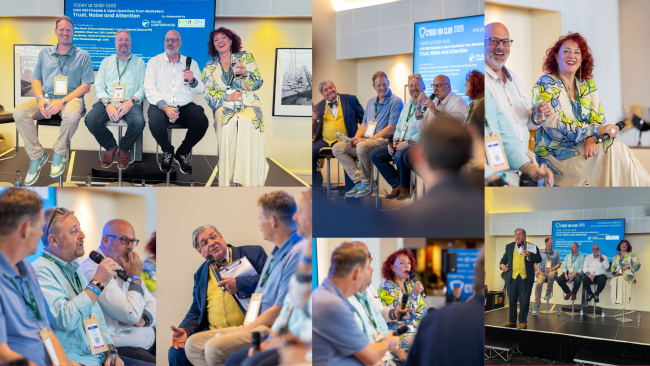
At the 4th Cyber 100 Club during Infosecurity Europe 2026, Eskenzi PR co-founder Yvonne Eskenzi joined Clive Room of Pulse Conferences to host a candid panel discussion examining how vendors can better engage with security decision-makers. The conversation focused on an age-old question that remains at the front of many cybersecurity marketers’ minds: what does it really take to earn the trust and attention of today’s CISOs?
The session, titled “Trust, Noise and Attention: How Can Cybersecurity Marketing Better Align with Today’s CISOs?”, brought together Shan Lee, CISO at DocPlanner Group, Lee Morton, Head of Cyber Security at GBG Plc, and Brian Brackenborough, CISO, to answer direct questions from marketers, founders and communications professionals.
One stand-out, clear message that came from the session was that cybersecurity marketing is not about generating more noise. CISOs are already overwhelmed with emails, calls and LinkedIn messages. What they value most is authenticity, patience and relevance. Rather than rushing to identify problems and pitch solutions, vendors should focus on building genuine relationships over time. It feels like a slow-burning activity, but it pays off.
Trust emerged as a regular theme throughout the discussion. The panellists highlighted that successful CISO engagement is built through respect and understanding, not relentless follow-ups and stalking. It’s NOT about telling CISOs what their problems are. It’s about taking the time to listen and understand what they themselves see as their biggest security challenges.
Security leaders want vendors to take the time to understand their organisations, challenges and priorities before attempting to sell. Generic outreach and scripted conversations were repeatedly cited as examples of what damages credibility.
Another key takeaway was that buying decisions rarely rest solely with the CISO. While security leaders may sponsor projects and approve budgets, the practitioners, architects and engineers who use the technology often have significant influence over purchasing decisions. Effective cybersecurity marketing requires vendors to engage across the wider security team, not just target senior decision-makers.
The panel also challenged traditional event strategies. Large exhibition stands and aggressive lead-generation tactics were seen as less effective than smaller, more intimate gatherings that encourage peer-to-peer discussion. Security leaders consistently rely on recommendations from fellow professionals when evaluating solutions. This is where strong CISO engagement and community building can create lasting value.
AI quickly entered the conversation (maybe due to the amount of “AI” messaging seen on the show floor?!), with the panel expressing caution about vendors simply rebranding products as “AI-first”. For today’s security leaders, functionality and outcomes matter far more than marketing buzzwords. If a solution solves a genuine problem, it will gain attention. If not, no amount of AI messaging will change the outcome.
The lesson for vendors is clear: successful cybersecurity marketing starts with trust.
Vendors need to invest in relationships, they must create meaningful conversations and demonstrate genuine expertise in the area they are experts in, not bandwagon jumping – this is what will earn them the attention of security leaders when buying decisions arise.
In an industry overcrowded with noise, credibility remains the strongest differentiator.
Get in touch with us here if you’d like to talk more about how you can influence CISOs effectively – we’d be more than happy to help.