AI Agents and Public Trust: What It Means for Cybersecurity PR & Communications
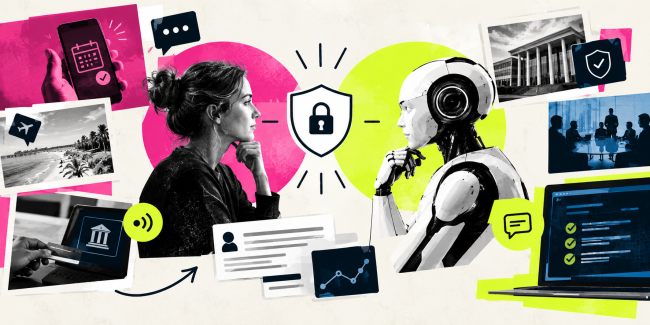
Mention “AI agents” and it doesn’t take long before someone jokes about them taking over the world. Behind the dramatic predictions, though, there’s a practical question that businesses need to answer: how much control are people prepared to hand over?
AI is moving beyond answering questions and creating content towards taking actions on our behalf. That could mean booking a holiday, managing a diary, making a purchase or accessing an account. The convenience is easy to explain. The boundaries need more attention.
As a specialist cybersecurity PR agency, we at Eskenzi PR wanted to understand where the British public draws the line. We commissioned Censuswide to survey 2,000 UK adults, and our AI Autonomy Line research revealed clear reservations about control, security and accountability.
For communications teams, the findings suggest that promoting AI capabilities alone could leave some of the public’s most pressing questions unanswered.
Explain Where Human Control Begins and Ends
Our research found that 84% of respondents would either give an AI agent no control over their day-to-day lives or restrict it to low or moderate autonomy.
More than a third (34%) wouldn’t give AI any control at all. Meanwhile, 27% would let an AI agent prepare things for them, provided they approve every action. Another 23% would allow it to handle routine tasks while asking permission for anything more important.
Only 11% were comfortable with high or very high levels of AI control.
That makes human oversight an important part of the story. Terms such as “autonomous” and “agentic” may appeal to a technology audience, but they need an explanation of what they mean in practice for the general public.
Can the system make a purchase without approval? Can it access a bank account? Can a user stop an action before it happens? Communications should make those boundaries easy to understand, using examples that reflect how the product actually works.
Treat AI Adoption as a Customer Trust Issue
The questions become more consequential when AI enters the organisations we all rely on.
If a bank, insurer or utility provider used an AI agent to advise its board, 37% of respondents would want reassurance that a human always had the final say. Almost a third (31%) would want to know exactly which decisions AI had been involved in.
One in five would consider switching provider, while 18% would be less likely to buy additional products or services. Just 10% would view the use of AI at board level as a positive sign that the organisation was modernising.
A message focused purely on speed, efficiency or innovation may miss the questions customers actually want answered: Who is still in control? Who is accountable if something goes wrong? And how is my data being protected?
PR and communications professionals need to think beyond promoting what AI can do and make sure they are also explaining where the boundaries sit. Transparency, human oversight and accountability should be part of the story from the outset, rather than something addressed only when customers start asking questions.
Make AI Security Claims Concrete
The biggest concern about AI agents, cited by 36%, was personal data being hacked or stolen. That was followed by AI making a mistake (31%) and having access to too much personal information (30%). More than a quarter (28%) worried that an AI agent could spend their money or make an unintended purchase. One in seven were concerned it could implicate them in something illegal.
For cybersecurity PR and communications teams, this is a useful guide to the questions that need answering. Broad assurances that an AI system is “secure” leave plenty of room for uncertainty.
Businesses should explain what information an agent can access, how permissions are set and what happens when it makes a mistake. Those explanations need evidence from the people building and securing the technology. The promises made in a launch announcement must match the safeguards users experience.
Address Accountability Before Something Goes Wrong
Some 40% of respondents believed the company that created the AI should bear primary responsibility when something goes wrong. Just 18% thought that responsibility should sit primarily with the person using it.
That finding reflects public expectations, rather than a legal judgement. It also suggests that businesses could face difficult questions if their messaging celebrates an agent’s independence while leaving responsibility unclear.
Communications teams should work with product, security and legal colleagues to explain how problems can be reported, who will respond and what support users can expect. Clear answers before launch can also provide a stronger foundation for communications if an incident occurs.
Build the Story Around Confidence
For a cybersecurity PR agency such as Eskenzi, this research clearly shows why understanding an audience matters when communicating technical advances such as AI,
There is room to explain the benefits of AI agents, but the research reveals substantial caution about handing them control. Businesses need to meet that caution with clear information about permissions, safeguards and responsibility.
The strongest AI story will give people enough information to decide whether they trust the technology. That means showing what it can do, explaining its limits and being precise about when a human still has the final say.