The Content Engine: Why Content Consistency Wins in Cybersecurity PR & Marketing
The cybersecurity industry is guilty of producing more content than ever. Blogs, research, thought leadership, social posts, videos, reports and press releases are all competing for attention and trying to be heard in a busy market. That’s on top of buyers consuming information across more channels than ever, and AI changing how companies are being discovered, but producing more content does not necessarily mean achieving more; in fact, it could be detrimental to your campaign.
So how do cybersecurity brands keep showing up without simply producing content for the sake of it?
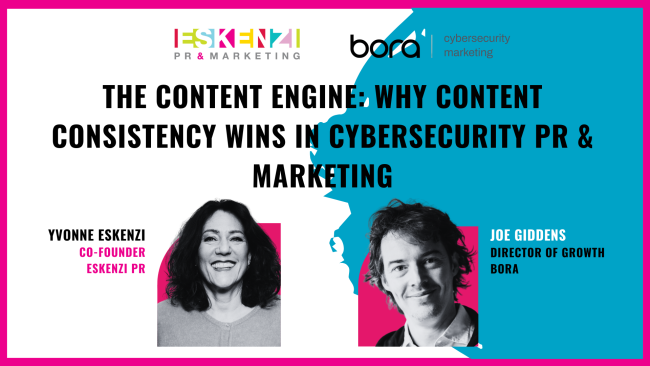
That was at the heart of our recent The Content Engine: Why Content Consistency Wins in Cybersecurity PR & Marketing webinar, where Yvonne Eskenzi, Co-founder of Eskenzi PR, joined Joe Giddens, Director of Growth at Bora, to discuss why successful content needs to be original, useful and consistent.
Good cybersecurity PR and marketing content starts with knowing your audience
The discussion kicked off with a simple but important point: if you want your content to resonate, you first need to understand your audience and earn their trust.
You can’t build trust with an audience if you don’t understand who they are, what they care about and the problems they’re trying to solve. For Joe, that means getting much closer to customers rather than creating content based on what a company thinks its audience wants to hear.
“Trust takes a long time to build because to be trusted, you have to be trustworthy,” he explained. “You can’t really shortcut your way to creating good content if you don’t know your audience first.”
Building that trust starts with listening. Speak to customers about the challenges they’re facing, understand what prompted them to look for a solution and find out which issues are actually keeping them awake at night. Those insights can then shape content that speaks directly to their priorities rather than adding to the noise.
Yvonne agreed, highlighting the importance of talking not only to customers, but also to sales teams and others on the front line who hear these challenges every day. For cybersecurity PR and marketing teams, these conversations can uncover the real experiences, pain points and opinions that make content relevant, credible and, ultimately, more valuable to the people you’re trying to reach.
Be the originator, not the regurgitator
One of Yvonne’s key messages was: “Be the originator, not the regurgitator.”
It’s particularly relevant when AI can generate huge volumes of generic content in seconds. Cybersecurity companies need to think about what they can contribute that nobody else can.
Proprietary research, customer experiences, expert opinions, first-hand knowledge and data generated through their own technology all provide opportunities to create what Joe described as “non-commodity content”.
“AI can’t produce original data,” Joe pointed out. He also stressed the importance of original opinions attached to a genuine person and personality.
For cybersecurity PR and marketing teams, that’s a valuable distinction. If your latest article could have been written by any of your competitors, it’s unlikely to do much to differentiate your brand.
Make one good idea work harder
Consistency doesn’t mean coming up with a brand-new idea every day.
Yvonne highlighted just how many places content now needs to work, from traditional media and analyst relations to websites, social media, video, influencers and online communities.
One original piece of research could fuel a press campaign, several thought leadership articles, blogs, videos, social posts, analyst conversations and sales materials. Each format can explore a different angle while staying rooted in the same central idea.
This matters for AI search too. Joe explained that organisations increasingly need multiple credible voices discussing their expertise across different channels, rather than relying solely on one corporate account repeating the same message.
Don’t abandon a good cybersecurity PR campaign too soon
Another challenge is knowing when to move on.
Marketing teams spend every day thinking about their campaigns, but their audiences don’t. As Joe put it: “When you think people are bored of hearing you, they’re only just starting to hear you.”
He suggested six months should often be the minimum lifespan for a strong campaign, with some ideas capable of working for a year or longer.
The important thing is to find the subjects you want your company to own and keep reinforcing them. Or, as Joe neatly summarised it: “Be known for something.”
Three tips for better cybersecurity PR and marketing content:
- Start with the audience. Speak to customers, prospects and sales teams and understand the problems they genuinely care about.
- Create something only you can create. Prioritise original research, proprietary data, expert opinions and first-hand experience over generic commentary.
- Make your best ideas work harder. Repurpose strong content across PR, marketing, social, video and other channels, and give campaigns enough time to build recognition.
Effective cybersecurity PR and marketing isn’t about creating the most content. It’s about consistently creating something worth paying attention to, then making sure it works hard enough and for long enough to reach the people who matter.
If you’d like to create content that really sticks, builds trust and keeps working long after it’s published, get in touch to find out how Eskenzi PR and Bora can help. Contact us here.
You can also the full webinar below: